Being Heumann Review: Disability Activism Gets the Biopic Treatment
Sian Heder's film adapts Judith Heumann's memoir with a focus on a 1977 sit-in, casting disabled actors in key roles.
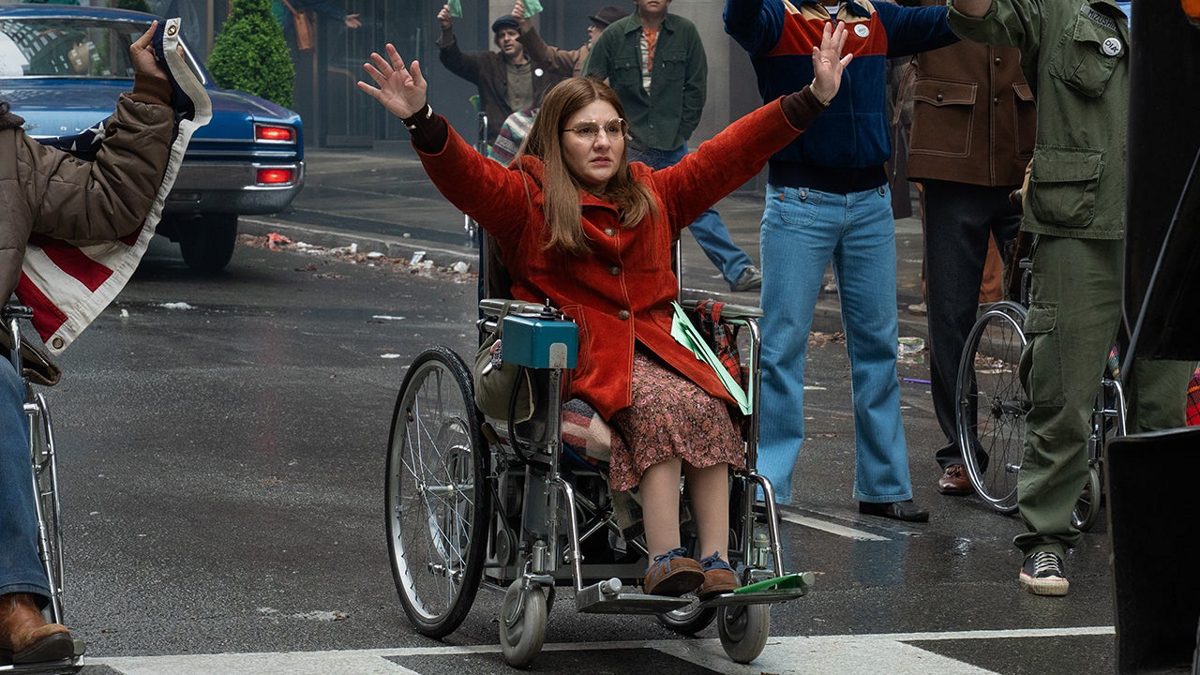
Being Heumann is in theaters now and debuts November 13 on Apple TV. The film, directed by Sian Heder of CODA fame, adapts the memoir of disability activist Judith Heumann into a biopic centered on a political sit-in. Ruth Madeley, a wheelchair user herself, plays Heumann, who in 1977 joins protesters furious with the Department of Health, Education, and Welfare's secretary Joseph Califano Jr., played by Mark Ruffalo, for refusing to sign an equality act known as Section 504. The protesters gather outside HEW offices in San Francisco, and Heumann makes demands for a building occupation until the legislation is signed.
The film reveals a moral wrinkle in Heumann's plan: she packed a toothbrush, indicating she always intended to stay overnight, but did not share this with her fellow protesters. This makes her self-absorbed in a compelling way, as her eyes open to how her actions affect others. Among the protesters is Ed Roberts, played by Michael Patrick Thornton, who cannot join the occupation because he needs to sleep in an iron lung. The ensemble includes many disabled actors, such as Andrew Pilkington as Hale Zukas, a nonverbal activist with cerebral palsy who communicates with a helmet-mounted pointer and a board of letters.
Heder's film makes minor alterations to traditional framing, with eye-level medium and group shots closer to the ground to accommodate wheelchair-using cast members, and the frame expands laterally to capture them. This approach speaks to Heder's fluid filmmaking, similar to her work in CODA, which cast real Deaf adults and edited to the rhythm of signed dialogue. Being Heumann does not shy away from the full dimensions of its disabled subjects, including their sex lives, making the sit-in seem pretty fun and hedonistic.
The real sit-in lasted nearly four weeks, and Heder details every challenge along the way as able-bodied allies like Dylan O'Brien's news reporter and Ray Fisher's Panther member embed themselves with the group. The movie occasionally leans toward prescriptive and verbose, with scenes pivoting around characters explaining their views, but this is part of Heder's aim to bring political debates about disability activism to the fore. The film is at its most interesting when its heroic subjects disagree, leading to greater cooperation down the line.
Source: IGN