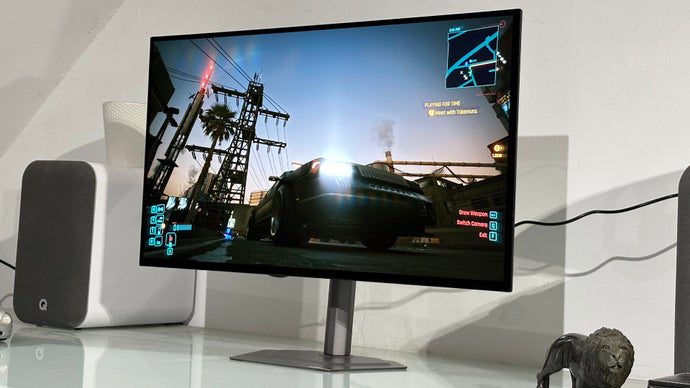
Gaming monitors are getting cheaper as GPU prices remain high
A glut of LCD and OLED panels and falling PC demand are pushing monitor prices down, even as graphics cards become more expensive.
While PC hardware prices continue to climb, gaming monitors have become remarkably affordable. Entry-level 1080p panels with triple-digit refresh rates can be found for around £60 or $60, and high-refresh 4K monitors now cost under £200 or $250. Even OLED monitors have dropped to prices starting with a "2" in both currencies.
The reason for this price drop is that the display market has not been consumed by the AI boom in the same way as GPUs and memory chips. AI data centers are filled with "headless" server racks that have no screens, and the end-user demand for monitors has not been driven by AI. At the same time, Chinese manufacturers built out massive LCD panel production capacity over the past decade, leading to oversupply. Samsung and LG have also shifted focus from TV panels to PC monitors.
The result is a market with abundant capacity and weakening demand, as PC sales have declined due to higher component costs. This creates a mismatch: monitors are cheap, but the GPUs needed to drive high-resolution displays have become extremely expensive. For example, a 27-inch 4K IPS monitor can be had for under £200, but the cheapest RTX 5090 on Newegg is over $6,500.
For most gamers, the best value remains at 1440p resolution, where both LCD and OLED monitors offer strong performance at reasonable prices. 27-inch 1440p OLEDs can be found for around £290 in the UK and $270 in the US, while 34-inch ultrawide OLEDs command a significant premium. 4K OLEDs in 27-inch and 32-inch formats are often cheaper than 34-inch ultrawide OLEDs, making them a compelling option for those with capable graphics cards.
Source: Rock Paper Shotgun